Workers’ compensation claims
Medical. Wage replacement. Legal. Administrative.
Physical Capacity Profile Testing for Employers
Give employers objective physical ability information before work begins, so they can reduce uncertainty and make better-informed decisions.

Selected employers using PCP testing






What Physical Capacity Profile Testing Helps Employers Do
Document that the person's physical abilities match the demands of the job.
Records objective maximum-strength measurements before work begins.
Support a safer, better-informed return-to-work decision.
Why the information matters
When physical ability is not documented before work begins, a mismatch can contribute to claims, lost work time, overtime and another hiring cycle.
Medical. Wage replacement. Legal. Administrative.
Production delays. Staffing gaps. Overtime.
Complicated claims. Complicated decisions.
Recruiting. Onboarding. Training. Again.
The missing information
The job has physical requirements. The person has physical abilities. PCP provides objective measurements so the employer is not left guessing whether a new hire is a good physical fit for the job.
How testing fits
Tied to the Department of Labor's five work classifications, the employer identifies the essential physical requirements of the job before testing.
Post-offer testing is arranged after the offer and before the individual begins work.
A trained administrator guides the participant through a standardized test in about 20 minutes.
The employer receives a three-page report documenting the applicant's physical ability tied to the Department of Labor's work classifications, so the employer can make the final decision.
During the test
A medically licensed administrator guides the participant through a standardized testing system while the equipment records the results.
Records upper- and lower-body strength with multiple trials using the PCP testing system.
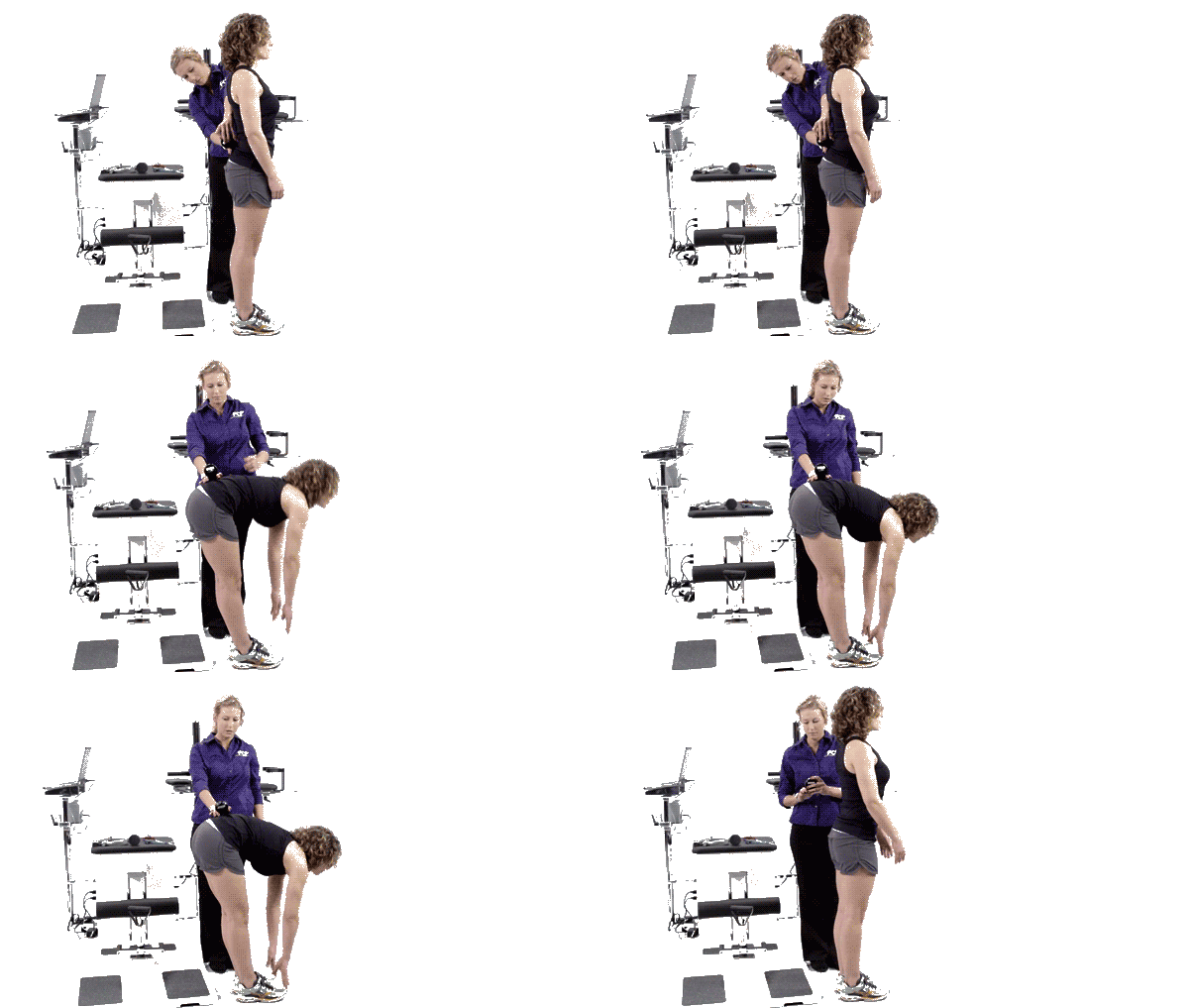
Records movement in degrees tied back to the American Medical Association Guides.
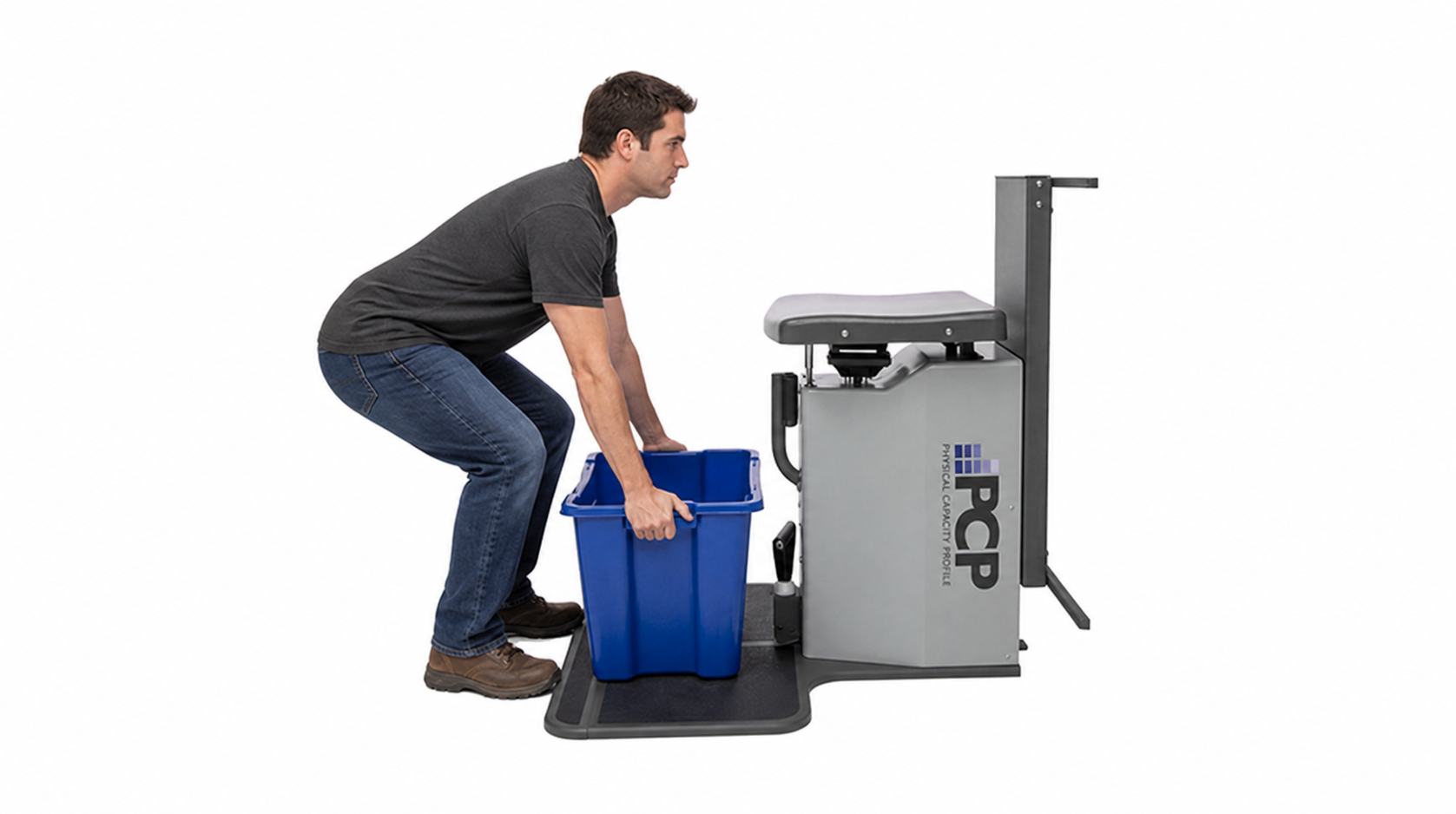
Records lifting ability through standardized equipment and steps.
Grip right and left, plus pinch right and left.
Elbow flexion, shoulder flexion and knee extension, each recorded on the right and left.
T12 range of motion, sacral range of motion and true lumbar flexion.
Torso lift, leg lift and the Progressive Isoinertial Lifting Evaluation, or PILE.
Completed squats and situps.
Pulse rate, blood pressure, body fat percentage and spirometry.
Evidence from the field
Experience across physically demanding work environments.
50%reduction in recordable incidents
57%reduction in workers’ compensation costs
Reported by a large manufacturing employer over a one-year period.
Employer-reported results reflect one organization’s experience. Outcomes vary based on implementation, workforce, job requirements and other factors.
When employers use PCP
Testing can document physical ability before work begins or support an appropriate process for a current employee.
Document physical ability after a conditional offer and before the individual begins work.
Explore Post-Offer TestingUse current measured physical information to support appropriate internal bids and transfers.
Discuss Internal Bids and TransfersUse measured physical ability information to support the appropriate fit-for-duty process.
Discuss Fit-for-Duty TestingA practical next step
Tell PCP which jobs carry real physical demands and which decision you need to support. We can help identify the appropriate testing conversation.