
In a competitive labor market, one of the greatest concerns for hiring managers is making an employment decision that results in financial loss. Finding an employee with the physical strength to do the job is an important part of limiting that risk.
Hiring someone who does not have the physical ability required for the work may lead to injury, attrition, a workers’ compensation claim and the indirect costs of lost wages and disrupted operations. Research discussed in the original white paper indicates that injury risk rises sharply when employees lack the strength required for the job.
Together, those direct and indirect costs can turn one poor physical match into a $25,000, $50,000 or, in some cases, $100,000 hiring mistake.
The financial exposure is rarely limited to one invoice. Medical treatment, wage replacement, legal and administrative costs can accumulate alongside production delays, staffing gaps and overtime. If the employee cannot remain in the position, recruiting, onboarding and training may have to begin again.
Without objective physical information, hiring professionals may be gambling with job offers that could cost their employer $100,000 or more.
The risk may be greater when a new hire has a previous injury or a history of physically demanding work. A post-offer PCP test gives the employer documented information after a conditional offer and before the individual begins the job.
When a new hire’s physical condition is objectively measured and documented, the employer has a clearer record of physical ability and related impairments from the time of testing.
The Risk of Reinjury
When new hires bring previous injuries into the workplace, both the employee and employer may face additional risk. Over time, an earlier injury can be aggravated by lifting, bending, pulling or twisting. A single workplace incident can also reinjure a shoulder, back, hand or wrist.
Objective data about existing impairments may help employers and their advisors distinguish what was documented before employment from what occurred or was aggravated later. Requirements vary by jurisdiction, so employers should review their testing and documentation practices with qualified legal and occupational health advisors.
A dated baseline does not decide responsibility for a later injury. It does provide a starting point. Without objective pre-employment information, the employer, employee and treating team may be left trying to reconstruct prior physical ability after the fact.
Job Simulation Versus the Physical Capacity Profile Test
Employers have often relied on pre-placement physical exams or job simulations to evaluate whether a person can perform essential job functions. Simulations may identify obvious job incompatibility, but they do not always provide standardized measurements, objective impairment information or a reliable baseline for later comparison.
The Physical Capacity Profile Test is designed to determine whether a person has the physical strength required for the job, assess existing impairments and establish baseline information that may be useful during future rehabilitation or return-to-work planning.
Unlike a pass-or-fail job simulation, PCP records objective measurements through a standardized testing system. The employer retains the decision and reviews the report alongside the established demands of the job.
The PCP Test: Objective Data and Reliable Results
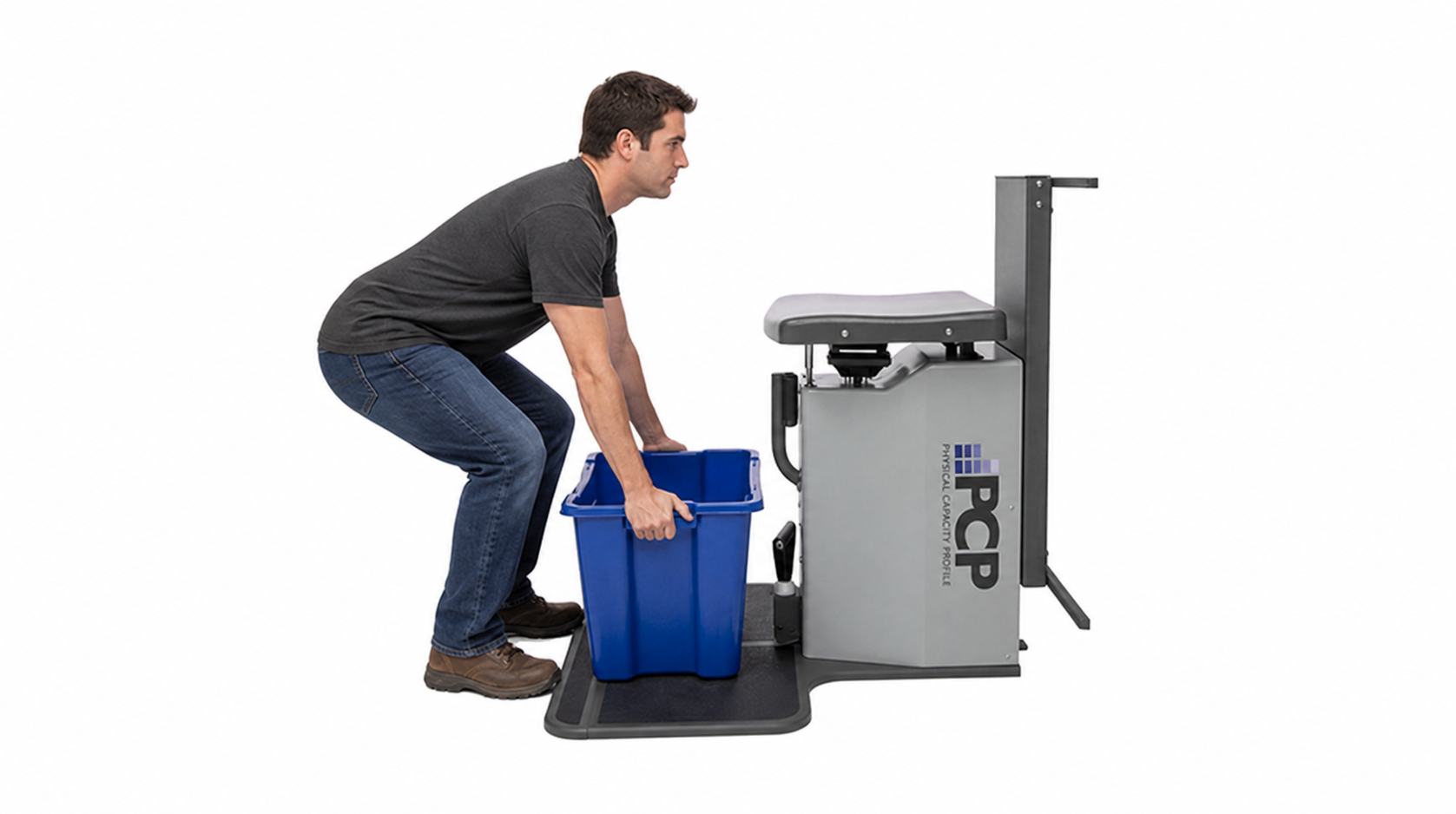
During a PCP test, the applicant completes a collection of physical measurements that are captured electronically. The report helps human resource professionals compare the person’s physical ability classification with the applicable U.S. Department of Labor level of work. It also reports impairment information based on measured results and applicable American Medical Association guidelines.
The standardized process records strength, mobility, lifting ability and other physical information rather than relying only on observation. The completed report gives the employer documented values and classifications that can be retained with the testing record and reviewed by the appropriate human resources, medical and legal advisors.
Establishing a reliable baseline can help protect both the employee and employer if an injury occurs. Objective pre-injury information may give a treating physician and the employer’s advisors a clearer reference when evaluating rehabilitation progress, maximum medical improvement and reentry to the workforce.
That record does not eliminate every hiring or injury-related cost. It reduces one important source of uncertainty. Instead of relying on memory, assumptions or a general pass-or-fail result, the employer has objective information from a defined point in time.