
Increased regulation, corporate risk-control objectives, employee satisfaction and retention all influence employee-acquisition protocols. Maintaining a safe and productive work environment begins with understanding whether a prospective employee’s physical capabilities align with the physical demands of a particular job or role.
Employers have several types of physical assessment available when screening candidates. The timing and scope of the assessment affect both the information it produces and how that information may be used. Two common approaches are pre-employment testing and post-offer testing.
Pre-employment testing
Pre-employment testing is often described as traditional physical screening. It occurs after a candidate applies for a position and may be used while the employer is narrowing the candidates being considered for an offer.
The source white paper describes this approach as a non-medical test with no medical questions or history. It therefore does not collect medical information that could be used as an illegal hiring bias. Employers should confirm the requirements that apply to their process with qualified legal and occupational-health advisors.
Post-offer employment testing
Post-offer testing occurs only after a candidate has received a conditional offer of employment that is contingent on satisfactorily completing the assessment. This type of test can include elements considered medical in nature, including a medical-history workup.
The distinction is important from an HR perspective, but the practical value also comes from the detail and usefulness of the results. Post-offer testing can provide a richer data set than traditional pre-employment testing, including medical-history and pre-existing-condition information that may help an employer and its advisors assess workers’ compensation responsibility after an on-the-job injury.
What a PCP test measures
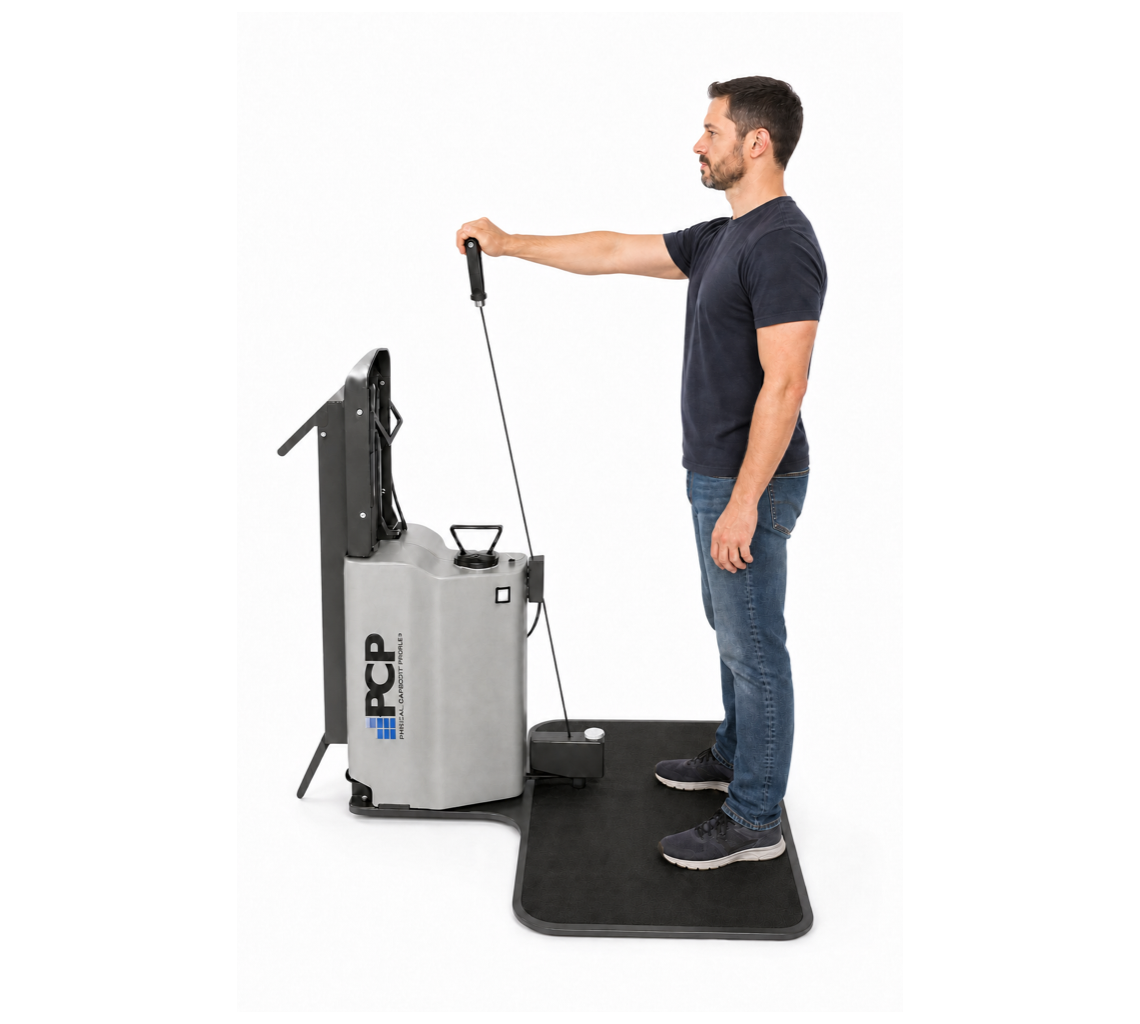
A post-offer Physical Capacity Profile® test measures body fat and weight, range of motion, limb strength, lift strength and other physical capabilities. Rather than a go/no-go result for a particular job, a complete PCP test determines quantitative physical limits correlated with Department of Labor strength categories.
The source white paper describes PCP testing as ADA, EEOC and HIPAA compliant. Because legal and medical requirements vary by situation, employers should use a consistent, role-specific process and consult qualified advisors about their obligations.
A documented baseline for future comparison
Quantitative assessment data can provide a baseline for comparison with a future post-injury assessment. The source paper also states that the test data is benchmarked against AMA guidelines. A pre- and post-injury comparison can be relevant when impairment comparisons affect workers’ compensation claims and awards.
How the differences can benefit employers
Post-offer testing can cost more because it is a medical test that requires medical staff. The source paper states that the savings from improved matching of candidates to job requirements can exceed testing costs, while noting that individual employer results vary with workforce, job design and implementation.
The paper cites studies reporting reductions in job-related injuries when employees were matched to job requirements through PCP test results. It also describes how pre-injury impairments documented before an injury can help limit workers’ compensation responsibility to impairments related to an on-the-job injury. Accurate measurement of whether an impairment was job-related may also be relevant to experience-rate modification for insurance premiums.
One cited study reported a 36% decline in average annual workers’ compensation expenses after PCP post-offer testing was introduced as a candidate-assessment method. This is a reported historical study result, not a guarantee of results for another employer.
A safer, more informed hiring process
Post-offer PCP testing can give employers objective physical information to review alongside the documented demands of the jobs they need to fill. PCP provides measured information; the employer retains the employment decision.
For information about using post-offer Physical Capacity Profile® testing in your organization, contact PCP at 785-825-4444 or visit pcpworks.com.
Sources
1. Harbin G, Olson J. Post-Offer, Pre-Placement Testing in Industry. American Journal of Industrial Medicine. 2005;47(4):303.
2. Harbin G, et al. Shoulder injury reduction with post-offer testing. Work. 2011;39(2):113-123.